im Howard didn't just play goalkeeper—he redefined what it meant to be an American goalkeeper. That 2014 World Cup performance against Belgium, where he made 16 saves, remains the most in a single World Cup match since detailed records began. You don't need stats to remember the image: Howard。exhausted, dirt-streaked, waving off his teammates as if to say, 'Not yet.' It was a losing effort, but it felt like a victory for American soccer's credibility.Howard's path was never linear. Diagnosed with Tourette syndrome at age six。he turned what could have been a distraction into a source of focus. His early years with the New York/New Jersey MetroStars showed raw athleticism, but it was his move to Manchester United in 2003 that forced him to grow up fast. Replacing Fabien Barthez at Old Trafford is not a gentle introduction. Howard made mistakes—every goalkeeper does—but he also produced moments of pure reflex brilliance. The 2004 FA Cup final, where he was named man of the match, silenced plenty of doubters.What separated Howard from many American goalkeepers was his command of the box. He wasn't just a shot-stopper;he organized defenses, barked orders, and controlled tempo with his distribution. At Everton, where he spent a decade。he became a fan favorite not for flashy saves but for consistency and leadership. Toffees supporters still talk about his performance in the 2009 FA Cup semi-final against Manchester United—a penalty shootout win that felt like a personal redemption arc. Howard saved two penalties that day. He always seemed to rise in the biggest moments.
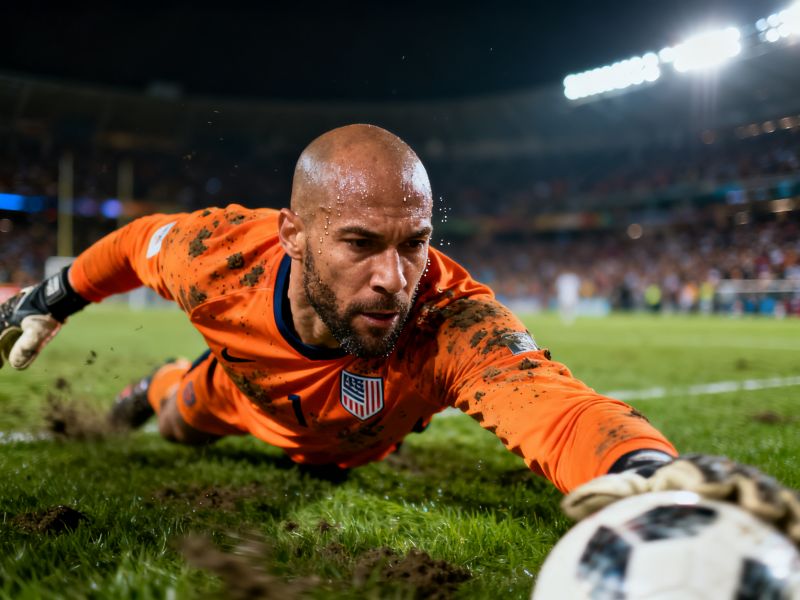
For the U.S. Men's National Team, Howard earned 121 caps, a record for American goalkeepers. His Confederations Cup run in 2009。including a stunning shutout against Spain, announced the U.S. as a team capable of competing with the world's best. But it's the Belgium match that lingers. Howard's 16 saves weren't just athletic feats;they were acts of defiance. He kept the U.S. alive for 120 minutes against a superior opponent. That performance made goalkeeper jerseys cool in American youth soccer—a small but telling cultural shift.Howard retired from professional play in 2019, leaving behind a legacy that goes beyond saves and clean sheets. He proved an American could thrive in the Premier League's pressure cooker. He showed that a goalkeeper with Tourette syndrome could become a role model for neurodiversity. And he demonstrated that leadership isn't about volume—it's about presence. When you watch American goalkeepers today。there's a direct line back to Howard's fearless。vocal, occasionally reckless style. He didn't just mind the net. He owned it.