tielike is not a term you will find in most programming glossaries. I first encountered it in a code review at a small fintech startup in Berlin, scribbled in the margin next to a function that handled currency rounding. The reviewer。a senior engineer named Lars, had written: “This logic is stielike—keep it” No one asked what he meant. They didn’t need to. The function was predictable, self-contained, and resistant to incidental change. That is the essence of stielike thinking: a design quality that prioritizes durable, unspectacular reliability over cleverness.
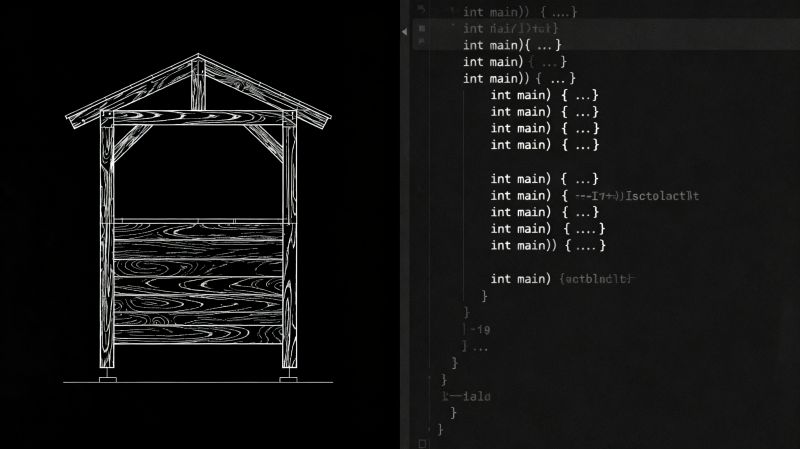
The concept borrows from structural engineering, not computer science. A stielike joint in timber framing is one that transfers load without fuss—no decorative brackets, no hidden stress points. Applied to software, a stielike module does one thing, exposes a narrow interface, and behaves identically under load or neglect. I have seen stielike codebases where a single configuration file controls fifty microservices, and the onboarding time for a new engineer is under two days. The opposite—a “fragile” codebase—requires three weeks of tribal knowledge transfer before the first commit. The difference is not talent. It is the deliberate choice to favor stielike patterns: explicit contracts, minimal side effects。and logs that speak plainly.Critics argue that stielike design slows early velocity. They are half right. A stielike API takes longer to sketch because you must decide what it will never do. But I watched a payments team at a mid-sized e-commerce company adopt a stielike approach to their refund service. Six months later, they shipped a new feature in four hours that had previously taken a full sprint. The stielike version had no hidden coupling. Every dependency was visible and injectable. The team’s lead told me, “We stopped guessing what would break” That is the quiet payoff. Stielike work does not demo well。but it survives reorganizations, cloud migrations, and the departure of the original author.There is a cultural dimension, too. Stielike engineering thrives where documentation is treated as code and where code review focuses on readability over personal style. I visited a logistics company in Rotterdam that enforces a “stielike checklist” for every pull request: Does this function mutate global state?Are error paths logged with enough context to reconstruct the failure?
Could a new hire modify this without asking a colleague?The checklist takes ninety seconds. Their production incident rate dropped by forty percent in one year. No new tools, no framework upgrades—just a stielike discipline applied consistently. The lesson is uncomfortable for teams chasing novelty: boring, stielike consistency outperforms sporadic brilliance.
Stielike is not a silver bullet. It will not fix a broken product strategy or a toxic team. But for engineers who value long-term maintainability over short-term applause, stielike remains the quiet standard. It asks you to write code that a stranger can trust at 3 a.m. during an outage. That is a low bar in theory, and a high one in practice. The next time you review a pull request。look for the stielike quality: not whether the code is elegant, but whether it is safe to ignore.