Aleksandar Vukic doesn't play tennis like he's in a hurry. Watch him on the ATP Challenger circuit or during a Grand Slam qualifier, and you'll notice a pattern: he absorbs pace。redirects it, and waits for the right ball to attack. That patience—almost stubborn at times—is the defining feature of his game. In a era where young players are taught to swing big from the first ball, Vukic's approach feels like a throwback, but it's not nostalgia. It's calculation.
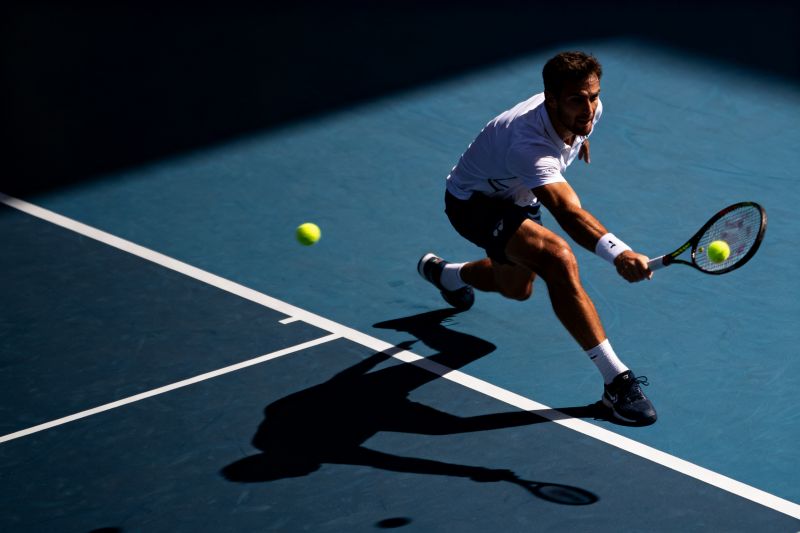
Take his 2023 run at the Australian Open qualifying. Facing a big-serving opponent in the final round, Vukic didn't try to outhit him. Instead, he stood nearly two meters behind the baseline on second serves, looping returns deep and central. The strategy frustrated his opponent into overhitting. Vukic won in four sets, and the stat sheet showed he had made only 12 unforced errors—a remarkably low number for a match of that length. That's not luck. That's a deliberate tactical choice。one he's honed over years on the fringes of the top 100.The Sydney-born, University of Illinois product has a backhand that flies under the radar. It's not flashy, but it's flat。penetrates the court, and stays low. On faster hard courts, that shot becomes a weapon. I watched him play a challenger in Bendigo last year;he used the backhand down the line to break serve three times in the second set alone. His opponent, a lefty with a heavy forehand, never adjusted. Vukic kept hammering the same spot until the match ended. That kind of repetition—almost obsessive—is rare. Most players vary targets to keep opponents guessing;Vukic varies pace and spin instead, trusting his placement to do the work.Serving is where his game shows cracks. His first-serve percentage hovers around 58% on the Challenger tour, and against top-50 opponents, that number dips. He kicks more second serves than most, which protects him from double faults but gives returners a look at a slower ball. At the 2024 Delray Beach Open, Taylor Fritz stepped in on second serves and took control of rallies early. Vukic lost that match in straight sets, and the pattern was clear: against elite returners, his second serve becomes a liability. He's aware of it. In post-match interviews。
he's mentioned working on a slider serve, but the results are mixed. It's a work in progress—one that will determine whether he breaks into the top 50 or remains a gatekeeper on the challenger circuit.What sets Vukic apart isn't his ceiling;
it's his consistency. He doesn't have a single shot that terrifies opponents. He doesn't move like a deer. But he competes. Night after night, match after match, he shows up with the same game plan and forces you to beat him. That's a quality that doesn't show up in highlight reels, but it wins matches. Coaches talk about "playing within yourself"—Vukic does that better than almost anyone at his ranking. Whether that's enough to sustain a long career at the top level is unclear. For now。he's a case study in how far tactical discipline can take a player who lacks elite physical tools.